


National Geographic 1999 February
Publisher: National Geographic
Format: Paperback
ISBN: none
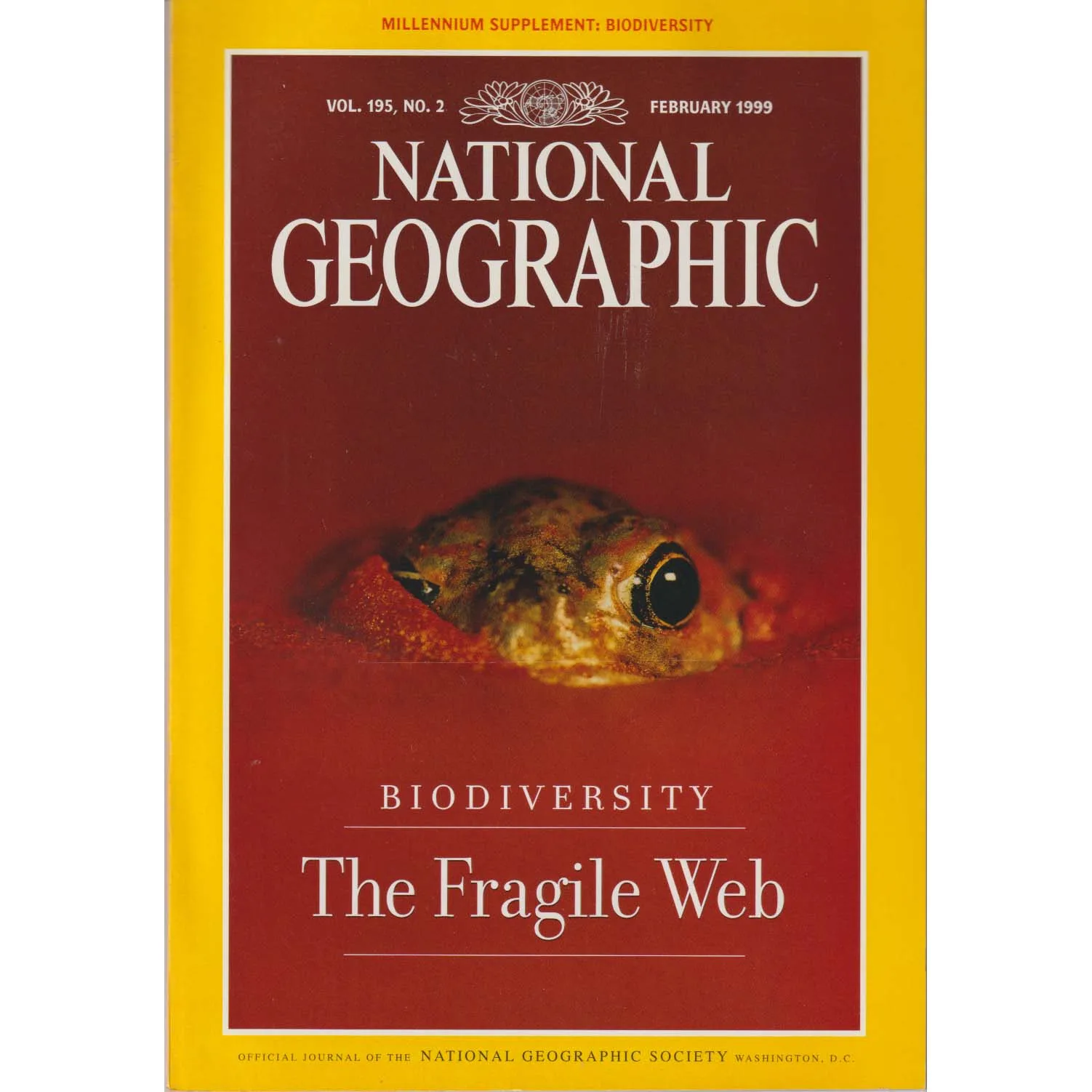
National Geographic, February 1999 turns up in its iconic yellow frame looking oddly solemn, like it’s about to sit you down and say, “Right. We need to talk.” The cover is a deep, velvety red with a single amphibian eyeing you from the shadows—half hidden, fully judging—under the headline “Biodiversity: The Fragile Web.” It’s understated, elegant, and quietly devastating. No explosions. No pyramids. Just a small creature and the unnerving suggestion that everything is connected and we’re all one bad decision away from unravelling the lot.
This is the Millennium Supplement: Biodiversity, which is 1999-speak for we’re approaching the year 2000 and we should probably take a long, hard look at what we’re doing to the planet before we start arguing about flying cars and robot butlers. It’s Nat Geo at its most earnest: the glossy, beautifully photographed intervention. You open it expecting some nice animals and end up contemplating extinctions, habitats, food chains, and the fact that your entire existence is propped up by countless unseen relationships between things you never think about. (Like frogs. And soil. And insects. And the bit of forest you thought was “empty.”)
The tone is classic late-90s National Geographic—calm, authoritative, and just a little terrifying in its politeness. It won’t shout at you. It will simply present an ecosystem so gorgeous and intricate that you’ll feel personally guilty for buying strawberries out of season. Then it will show you what happens when one thread snaps, and you’ll suddenly understand why the word “fragile” sits there like a warning label on a wine glass.
There’s also something wonderfully ironic about reading this now: a biodiversity “millennium” supplement from 1999 feels like a message in a bottle from a slightly more optimistic world—one that still believed a well-researched magazine issue might gently steer humanity toward better choices. Which is adorable, honestly, in the same way it’s adorable that we thought everyone would be using hoverboards by 2015.
Condition: Good, which is fitting: the edges have lived a little, like the natural world it’s describing. Sold by Crappy Old Books, because of course a serious, beautifully made plea for ecological sanity ends up in a second-hand shop with a name that sounds like a pub insult. But that’s the charm—this isn’t just a magazine, it’s a time capsule of conscience, dressed in high-gloss photography, ready to be re-read, re-felt, and quietly left on the coffee table to make guests slightly uncomfortable in the best way.
Includes biodiversity poster.
Keep browsing: See more National Geographic books Other books by National Geographic
